Trajectory Control – Hitting It High and Low on Command
Published September 14, 2026
Trajectory Control involves adjusting your setup and swing mechanics to change the launch angle and peak height of the ball. By modifying ball position and swing path, golfers can hit low punch shots to pierce the wind or high shots to stop the ball quickly on the green.
Trajectory Control — Orlando, Florida
Trajectory Control is one of those skills that separates the average golfer from the true shot-maker. For many of us, our ball flight is a “one-size-fits-all” experience; we hit the ball the way it wants to go, and we hope for the best. However, the game of golf rarely provides a perfect environment. Whether you are battling a stiff breeze on a coastal course or trying to clear a towering bunker, the ability to manipulate the height of your shot is critical for lowering your scores.
This article explains how Trajectory Control works in Oregon and what readers should know next.
For practical next steps on Trajectory Control in Oregon, review the sources listed at the end of this guide.
Readers researching Trajectory Control in Oregon should confirm current rules with the official sources cited below.
Understanding Trajectory Control helps avoid costly mistakes for families in Oregon.
The Challenge of Ball Flight
Most amateur golfers struggle because they rely on a single, standard swing for every shot. When the wind picks up, they try to swing harder to “cut through” it, which often leads to inconsistent contact and erratic directions. The real secret to scoring is not hitting the ball harder, but hitting it smarter. By mastering Trajectory Control, you can choose a piercing low flight to avoid the wind or a towering high shot to stop the ball quickly on a firm green.
Imagine playing a round at Sea Island Georgia – Southern Coastal Golf Retreat on the Atlantic. On a coastal course like that, the wind is a constant factor. If you cannot control your trajectory, the ocean breeze can turn a perfect drive into a lost ball in the dunes. Learning to flatten your flight allows you to keep the ball under the wind, while learning to launch it high allows you to drop the ball softly over hazards.
Fundamentals of Trajectory Control
At its core, Trajectory Control is a matter of physics involving the launch angle and the amount of spin applied to the ball. The launch angle is primarily determined by the dynamic loft of the club at impact and the angle of attack. If you hit down on the ball with a club that has a low loft, the ball starts low. If you hit the ball with a more ascending blow or use a club with more loft, the ball starts higher.
Setup is the foundation of these changes. By simply moving the ball a few inches in your stance or adjusting how your weight is distributed, you change the geometry of the swing. This alters where the clubhead meets the ball and how the club delivers its energy. Understanding these basics allows you to stop fighting the club and start using it as a tool for precision.
Hitting Low Shots on Command
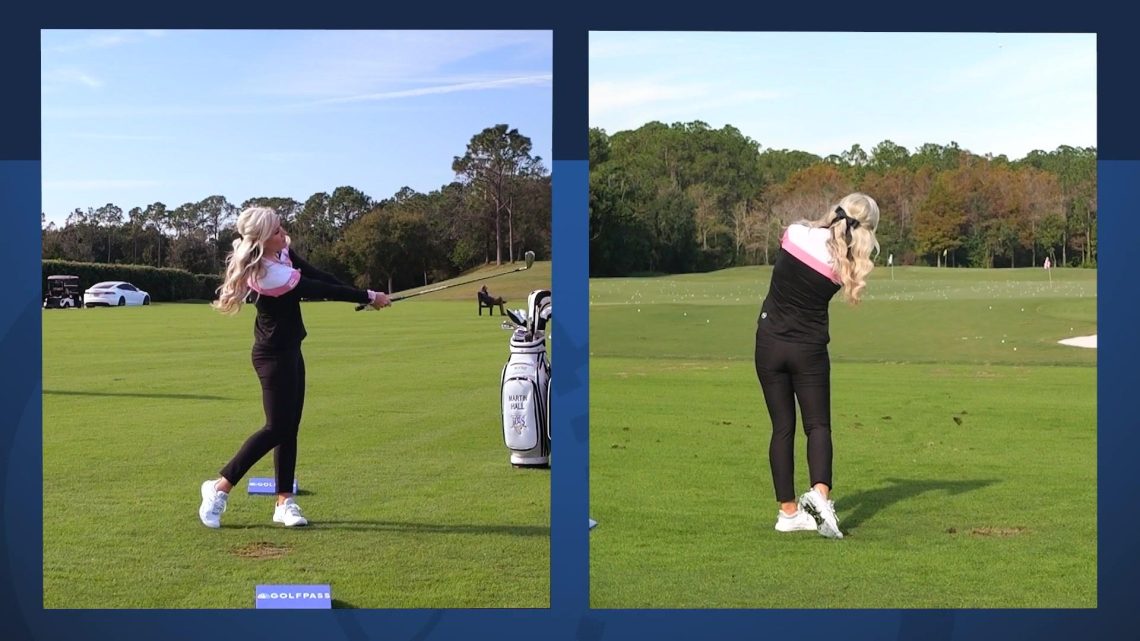
To achieve a low, piercing flight, you need to reduce the launch angle. Professional golfers, including Tiger Woods, use specific setup and swing adjustments to achieve this. The goal is to keep the ball under the wind and maximize roll-out upon landing.
- Ball Position: Move the ball slightly back in your stance, closer to the center. This encourages a steeper angle of attack and prevents the club from “bottoming out” too early.
- Stance and Weight: Narrow your stance slightly and keep your weight shifted toward your trailing foot. This prevents you from lunging forward and helps maintain a shallower, more control led strike.
- Swing Path: Focus on a shorter backswing and a feeling of “holding” the handle through impact. Avoid flipping the wrists, which adds loft. Instead, keep the hands ahead of the ball at impact to deloft the club.
When you combine these elements, the result is a shot that cuts through the air with minimal peak height. This is the ideal shot for windy days or when you need to keep the ball below a tree canopy.
Hitting High Shots on Command
Conversely, hitting a high shot requires you to increase the launch angle and often increase the spin to ensure the ball lands softly. This is essential for clearing bunkers or hitting into greens where you want the ball to stop immediately.
- Ball Position: Move the ball forward in your stance. For an iron shot, this puts the ball closer to your lead heel. This allows the club to reach the bottom of its arc and begin ascending slightly at impact.
- Weight Distribution: Keep your weight centered or slightly more on your lead side, but avoid leaning too far forward. The goal is to create a wider arc that launches the ball upward.
- Swing Feel: Focus on a full, fluid release of the clubhead. Allow the natural loft of the club to do the work. A feeling of “swinging up” through the ball, without losing balance, helps achieve that towering peak height.
Mastering these high shots is a great complement to your Chipping Fundamentals: Tight Lies and Standard Lies, as both require a keen understanding of how launch angles affect where the ball stops.
Common Mistakes in Trajectory Control
Many golfers attempt Trajectory Control but end up with inconsistent results because of a few common errors. The most frequent mistake is over-swinging. When trying to hit a low shot, players often swing too hard, which causes them to lose their balance and shift their weight incorrectly, leading to thin shots or hooks.
Another common error is incorrect weight distribution. For high shots, some golfers lean too far back, causing them to hit the ground behind the ball (a “fat” shot). For low shots, some lean too far forward, leading to a “top” shot. The key is to maintain a stable core and let the ball position and hand position dictate the flight.
To fix these issues, focus on tempo. Whether you are hitting it high or low, your swing speed should remain relatively consistent. The trajectory comes from the setup and the release, not from the raw power of the swing.
Practice Routines for the Range and Course
Improving your Trajectory Control requires a structured approach. You cannot simply hope for the right flight; you must train your brain and body to recognize the different feels.
Start at the range with a “Ladder Drill.” Hit three shots with the same club: one low, one medium, and one high. Do not move to the next club until you can consistently produce all three flights. This builds the muscle memory needed to make these adjustments under pressure.
Once you are comfortable on the range, transition to on-course application. During your next practice round, challenge yourself to hit at least one low shot and one high shot per hole, regardless of whether the hole actually requires it. This bridges the gap between a control led environment and the reality of the course.
It is important to note that while these tips provide the framework, visual cues are invaluable. Since specific drill durations and step-by-step cues from the 20-minute School of Golf series are not fully detailed in the research, we highly recommend visual confirmation via the School of Golf series to see these movements in real-time.
As a team based in Oregon, we know that local conditions—from the misty mornings to the firm summer fairways—demand this kind of versatility. Whether you are playing at a local muni or a destination like Black Butte Ranch – Sisters Oregon’s Two-Course Mountain Retreat, having these tools in your bag will make you a more confident player.
Trajectory Control Checklist
Use this quick-reference guide to adjust your shots on the fly:
For Low Shots:
- Ball position: Centered or slightly back.
- Weight: Shifted toward trailing foot.
- Hands: Ahead of the ball at impact.
- Feel: Short backswing, piercing flight.
For High Shots:
- Ball position: Forward in the stance.
- Weight: Centered or slightly lead-side.
- Hands: Natural release of club loft.
- Feel: Fluid arc, towering peak.
Frequently Asked Questions
Who are the instructors that teach Trajectory Control in the School of Golf?
Instructors Martin Hall and Blair O’Neal cover these essential skills in Season 14 of the School of Golf.
Whose swing changes are used as a model for hitting low versus high shots?
The instruction focuses on the specific setup and swing changes that Tiger Woods utilizes to control his ball trajectory.
What is the primary goal of mastering Trajectory Control?
The goal is to be able to hit the ball high or low on command to handle various course scenarios, such as wind or specific landing requirements.
Sources
For more information, see: