
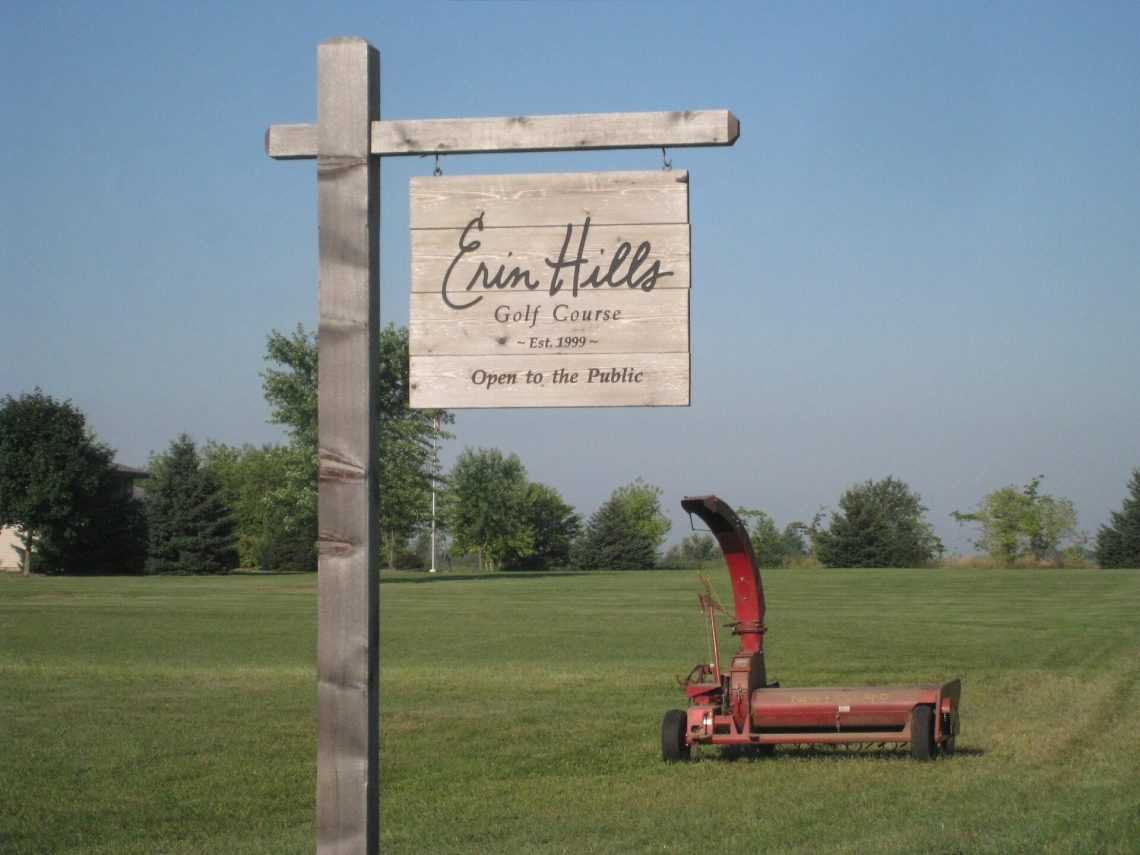
Erin Hills Golf Course: Wisconsin’s Public Links Icon
Published November 13, 2026
Erin Hills is a premier public links-style golf course located in Hartford, Wisconsin, designed by Michael Hurdzan, Dana Fry, and Ron Whitten. It is best known for hosting the 2017 U.
Imagine standing on a high ridge in the heart of Wisconsin, looking out over a vast, undulating sea of fescue and bentgrass with not a single tree to break the horizon. The wind whips across the open terrain, turning a straightforward drive into a strategic puzzle and a gentle approach into a battle of wills. This is the essence of the experience at the Erin Hills Golf Course in Hartford, a destination that brought the raw, punishing spirit of traditional seaside links to the American Midwest.
The Rugged Allure of the Wisconsin Links
Located in Hartford, Wisconsin, this course is a masterclass in inland links design. Unlike the manicured parkland courses common in the region, the landscape here is defined by rolling terrain and an almost total absence of trees. This openness makes the wind a primary protagonist in every round. Depending on the day, the breeze can act as a helpful tailwind or a brutal headwind that adds strokes to a player’s score and tests their mental fortitude.
The visual character of the course is one of rugged beauty. The wide-open fairways provide a sense of freedom, but the deceptive contours of the land and the presence of wispy rough ensure that precision is rewarded. For those of us at JGolfs, who appreciate the diversity of the sport from our home base in Oregon, seeing such a distinct architectural style in Wisconsin highlights the global reach of links-inspired design.
Design and Evolution of Erin Hills Golf Course
Erin Hills Golf Course opened its gates in 2006, the result of a collaborative vision by designers Michael Hurdzan, Dana Fry, and Ron Whitten. From its inception, the goal was to create a championship-caliber test that felt organic to the land. However, the course we see today is not exactly as it was on opening day. As the venue evolved into a world-class stage for the USGA, specific modifications were made to meet the demands of professional play.
One of the most notable changes involved the removal of a blind par 3, which was deemed unsuitable for the high-visibility requirements of a major championship. Additionally, several greens were moved to improve sightlines and challenge the world’s best players more effectively. These adjustments transformed the layout from a high-end public course into a venue capable of hosting the most prestigious events in golf.
A Legacy of USGA Championships
The reputation of Erin Hills Golf Course was cemented through a series of high-profile USGA events. The course was awarded the 2008 U.S. Women’s Amateur Public Links even before it officially opened to the general public, signaling the USGA’s immediate confidence in the design. This was followed by the 2011 U.S. Amateur, where Kelly Kraft emerged victorious after a tense duel against Patrick Cantlay.
The pinnacle of its hosting duties came in 2017, when it became the site of the first U.S. Open ever held in the state of Wisconsin. The event was a showcase of power and precision, with Brooks Koepka claiming the title with a dominant 72-hole score of 16-under par. The course continued its championship streak by hosting the 2022 U.S. Mid-Amateur, where Matthew McClean of Northern Ireland defeated Hugh Foley of the Republic of Ireland to take the trophy.
Course Character and Technical Specifications
For the average golfer, the numbers at Erin Hills can be intimidating. The layout stretches to a massive 7,731 yards, with a slope rating of 145 that warns of its difficulty. To manage this, the course provides seven different tee-box options, allowing players of various skill levels to enjoy the experience without being completely overwhelmed by the championship length.
The architectural hallmarks of the course include:
- Elevated multi-tiered greens that require precise approach shots.
- Large, heavily contoured putting surfaces that can make a 10-foot putt feel like a journey.
- Severe collection areas that punish errant shots and force creative recovery play.
- Wide-open fairways paired with generally playable, though thick, wispy rough.
One critical detail for any visitor is the walking-only requirement. This policy preserves the integrity of the links land and ensures that golfers experience the terrain exactly as the designers intended, mirroring the traditions of the great courses in Scotland and Ireland.
Signature Challenges and Hole Highlights
While every hole offers a unique test, the championship setup reveals the true teeth of the course. A prime example is the first hole, a daunting 532-yard par 5. In the championship configuration, the fairway is approximately 50 yards wide, which sounds generous until you account for the wetlands hugging the left side. The hole demands a strategic start, forcing the player to balance the desire for distance with the risk of finding the hazards early in the round.
Throughout the round, the interaction between the rolling hills and the elevated greens creates a series of “blind” or semi-blind shots that require a good caddie or a keen eye for the landscape. The challenge is not just in the length of the holes, but in the navigation of the terrain.
Comparing the Links Experience
For enthusiasts who have traveled to other rugged destinations, Erin Hills fits into a specific category of “inland links.” It shares a similar spirit of adventure and raw nature with other modern masterpieces. For instance, the high-desert experience at Gamble Sands in Washington offers a similarly treeless, wind-swept environment that challenges the player’s shot-shaping abilities.
Similarly, the remote and expansive nature of Silvies Valley Ranch in Oregon provides that same sense of isolation and scale. While the flora and fauna differ, the psychological effect is the same: you are playing against the elements as much as you are playing against the course. Whether you are using a high-stability driver like the Ping G430 MAX Driver to fight the wind or relying on the precision of a forged iron, the environment at Erin Hills demands a versatile game.
Visitor Logistics and Practical Takeaways
A visit to Erin Hills Golf Course in Wisconsin is a bucket-list item for many, but it requires some preparation. Because of the walking-only policy, comfortable footwear and a sturdy pull cart are essential. The course is designed to be a pure golf experience, stripping away the distractions of carts and trees to focus on the game itself.
Regarding the specifics of a visit, we must note an honest gap in the available data. We could not verify current specific green fee ranges or detailed clubhouse lodging options from the provided research sources. Prospective visitors should contact the course directly or check their official booking portal for the most up-to-date pricing and availability.
The best time to experience the course is typically during the late spring through early autumn, when the Wisconsin weather is most favorable and the fescue is in its prime. Regardless of when you go, the experience of walking those rolling hills, knowing where Koepka and Kraft once battled, makes it a mandatory stop for any serious golf lover.
Frequently Asked Questions
Who designed the Erin Hills golf course?
The course was designed by Michael Hurdzan, Dana Fry, and Ron Whitten and opened in 2006.
Which major championship did Erin Hills host in 2017?
Erin Hills hosted the 2017 U.S. Open, which was the first time the event was held in Wisconsin; Brooks Koepka won the tournament.
What makes the layout at Erin Hills unique?
It is an inland links layout featuring rolling terrain with no trees, meaning wind is a significant variable in play.
Is Erin Hills a private or public course?
Erin Hills is a public course.
Sources
For more information, see:
Image credits
- Featured: Photo by Dan Perry (CC BY) via Wikimedia Commons.